Cooking with Young Children
By Monica Worsley · Published 22 July 2015
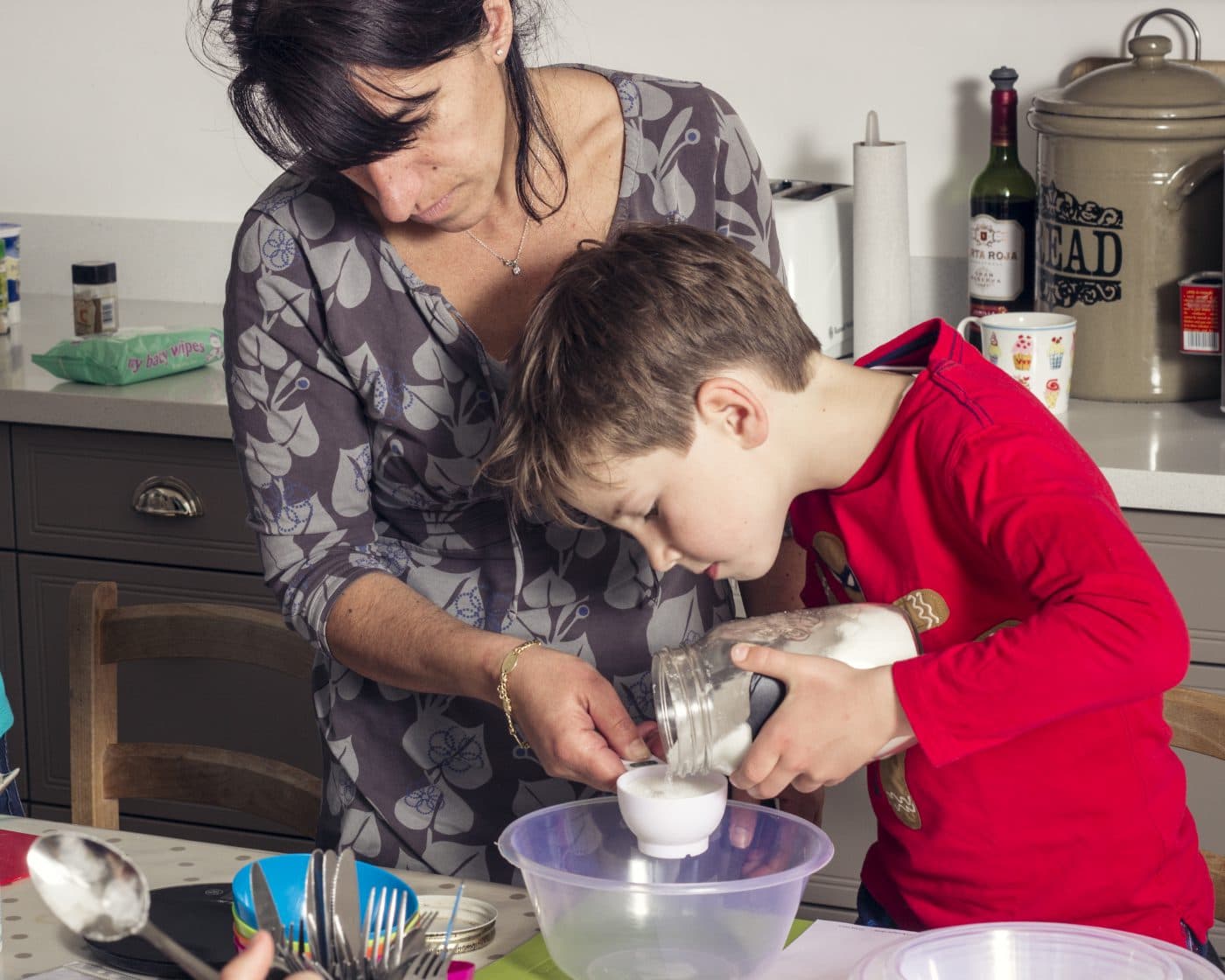
Cooking with Young Children
It can be a real pleasure for children of all ages. Start them young and with any luck they'll develop a lifelong love of the kitchen and food as well as skills they can use throughout adulthood, especially when they leave home. they will be really grateful.
Children will vary in their ability to undertake different cooking activities. Use your own judgment to choose tasks you think are suitable for your child. Safety is the biggest concern, beyond that a little trial and error is all part of the fun.
Below I have put together a list of suggested activities for under 3s, 3 - 5 year olds, 5 - 7 years olds, 8 - 11 year olds and children 12 and above, which I find helpful for my after school club, when I have up to 8 children having FUN in my kitchen cooking together.
Your little one may not be able to tie their shoe laces or get their t-shirt on by himself but from around 18 months, your child will probably want to start 'helping you out' in the kitchen. Take advantage of their interest to give yourself a break and have fun together. If they're entertained in the kitchen you can get on with the business of cooking and you'll both be happy.
Ensure all hazards are away from small hands - pot handles, hot food and liquids, sharp or heavy utensils and cleaning products. Think about what they can reach or trip over and make sure there is always a clear path if you're carrying anything hot, sharp or heavy. You can set them up on the kitchen table so you know they're at a safe distance. Once you've cleared the way, this is your opportunity to teach your child about food and familiarise them with the kitchen environment.
These are some of the activities very young children will enjoy:
- Washing vegetables - this is a great way of teaching them the names of vegetables and hopefully encourage them to try different foods.
- Stirring ingredients - they should be at room temperature.
- Mashing with a fork or potato masher - again watch out for temperature.
- Sprinkling - flour, cake decorations and icing sugar, put a tray underneath to avoid too much mess.
- Spooning ingredients into scales - you'll need to help!
- Mathematical concepts- you can help them to recognise colours, shapes and numbers
- Another way to keep young children occupied is to give them plastic containers and utensils to wash in the sink - this can provide lengthy entertainment while you cook. Although you must be patient with the amount of water spills.
Cooking with 3-5 year olds
In addition to the skills for under 3s, 3 - 5 year olds with their increased 'common sense', ability to follow instructions and they can undertake a wide range of skills. It will depend on your knowledge of your child, as skills can vary greatly at this age from child to child. Many children really don't want to listen to orders, so think safety first and don't try and tackle anything your feel unsure about.
Activities to try with 3 - 5 year olds:
- Weighing - pouring or spooning ingredients into scales. Using measuring spoons
- Washing fruit and vegetables
- Cutting soft ingredients eg butter, mushrooms, strawberries using a strong plastic knife
- Breading and flouring - you can set up three stations with flour, beaten egg and breadcrumbs for fish fingers, turkey or chicken.
- Mixing - using either a spoon or hands to mix together ingredients, this is your opportunity to make bread.
- Tearing and squashing - tearing herbs and lettuce or squashing fruit
- Sieving - it's best to balance the sieve over a bowl and tap it rather than shaking it around! you may end up with a child covered in flour.
- Using a pestle and mortar - a light wooden one is better than a heavy one.
- Kneading - light kneading can be fun but you'll need to step in to complete the task
- Rolling, shaping and cutting dough - choose plastic cutters and a small rolling pin
- Spreading - buttering bread and spreading icing
- Podding, picking and hulling - podding broad beans, picking leaves, tomatoes or grapes off the vine and hulling strawberries
Cooking with 5-7 year olds
Of course by now most children will be able suggested for 3-5 year olds, you can now introduce your child to trickier techniques and equipment. At this stage, you could think about buying your child a knife designed for young cooks or using a small adult one. With the introduction of sharp cutting tools like knives and scissors, always consider the ability of your child and if you're not comfortable, then leave it for a while. There are still other more complex skills they can enjoy. If you do think they can manage then still always keep an eye on them as it's very easy to slip even for adults.
Activities to try with 5 - 7 year olds:
- Cutting using a small knife - children should learn how to form their hand into a claw (or as my children like to call it 'the bridge') to keep fingertips out of danger.
- Cutting with scissors - if you can get smaller scissors or children's scissors, use them to snip herbs
- Grating - fingers can easily be grated so keep watch and make sure they don't get too close to the end of whatever they're grating
- Measuring - even the very youngest children can do this but as children learn to read and do basic maths, this is a great opportunity for them to do this with less supervision (but careful, do not end up with too much sugar on a cake!)
- Rubbing in - rubbing in flour and butter with fingertips is called for in many recipes
- Beating and folding - show children how to beat cake mixture with a wooden spoon or fold in egg whites without knocking out too much air
- Greasing and lining a cake tin or tray
- Peel oranges or hard-boiled eggs - make sure eggs aren't too hot, run them under the cold tap first and be careful of residual heat
Cooking with 8-11 year olds
When children reach 8 +, they can start to get involved with planning and undertake activities with a bit more independence, some may be able to cook a meal by themselves with some supervision. Especially if they have been cooking since they were young. Supervision is still key due to the number of hazards in the kitchen but take a hands off approach where possible.
Activities to try with 8 - 11 year olds:
- Planning the family meal
- Following a simple recipe or even writing their own recipes
- Finding ingredients in the cupboards and fridge
- Using a peeler
- Whisking, using a balloon whisk or handheld mixer
- Using heat on a hob, oven and microwave
- Making salads
- Opening cans
- Gradually introduce your children to the above and make sure they are aware of the dangers involved. Cuts and burns are common in the kitchen so always be careful. However capable they may be, it's easy to get distracted or try to rush an activity.
Cooking with 12+ year olds
At this age, they begin to be able to prepare complex recipes and even start improvising. How much they can achieve depends on how interested they are in cooking and how much they've done before.
When children learn to look, they will do so by following the recipes carefully with your help. As they become older and more experienced, let them experiment with quantities, although remember that most baking recipes have specific quantities that will not work if changed. Give them opportunities to let their imagination run wild when it comes to presentation of the final dish.
Children will learn many things through cooking, but the greatest lesson they can learn is to love preparing delicious, healthy, well-rounded meals.